





Everything You Need to Know About Nursing Homes in Singapore

Key takeaways
- Singapore’s rapidly ageing population, combined with longer life expectancy, means a growing number of people may face severe disability and require long-term care at some stage of life.
- Severe disability is defined as the inability to perform at least three out of six Activities of Daily Living (ADLs), which determines eligibility for nursing home admission and insurance payouts.
- Nursing homes provide round-the-clock care and rehabilitation, but monthly costs can range from $1,200 to $4,500, even after considering the Ministry of Health (MOH) subsidies.
- National schemes such as ElderShield and CareShield Life, along with supplementary plans, help ease the financial burden of long-term care and disability-related expenses.
The United Nations defines a country as "ageing" if the share of its population aged 65 and above crosses 7 percent. It is considered "aged" if the share exceeds 14 percent. Once the share reaches 21 percent, it is "super aged".
Singapore is projected to attain “super aged” status in 2026, as more than one in five here is expected to be 65 years old or older. By 2030, one in four Singaporeans will be aged 65 or above, according to the Ministry of Health (MOH).
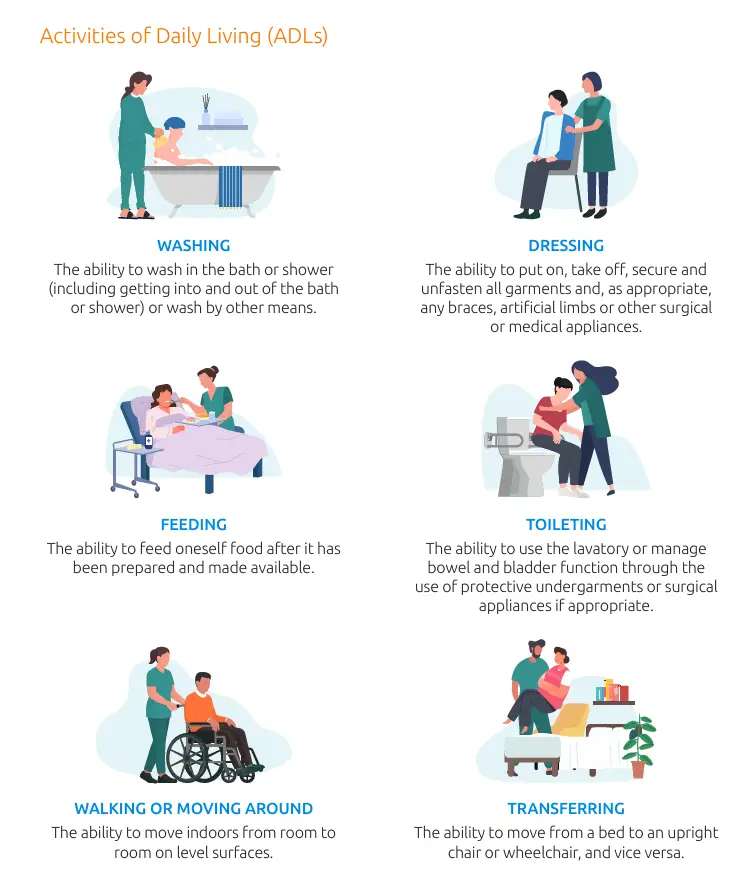
Unfortunately, with that, comes health conditions and disabilities as people grow older. In fact, one in two Singaporeans is at risk of severe disability at the age of 65, and this is defined as the inability to do at least three of the following six activities of daily living:

Nursing homes in Singapore
Run by either the private sector or social service agencies (SSAs – previously known as voluntary welfare organisations or VWOs) in Singapore, nursing homes are essentially long-term residential care homes which provide many services to its residents who are unable to be cared for at home by caregivers or service providers including:
- Assistance with Activities of Daily Living such as showering, going to the toilet, and eating.
- Skilled nursing care and supervision 24/7.
- Rehabilitation therapies and programmes to stimulate cognitive functions.
That said, it is important to note that not everyone can be admitted into a nursing home in Singapore. Whether or not an elderly person can enrol in one depends on their their eligibility. These include:
- Being physically or mentally disabled due to an illness.
- Facing mobility issues including being wheelchair-reliant or bedbound.
- Being unable to be cared for at home by their family or a paid domestic worker and have tried all other care options including daycare and home nursing care, among others.
Some nursing homes also provide seniors with respite care, in cases where caregivers only require short-term services. This is provided the elderly person meets some minimum criteria, like needing moderate-to-high nursing care needs, and already has arrangements for long-term care.
Night respite can also be offered by nursing homes, but specifically to caregivers of persons with dementia with sundowning behaviour (a state of confusion which causes a variety of behaviours which starts in the late afternoon, all the way throughout the night), to allow them the opportunity to take a breather from their night-time caregiving duties.
Costs of nursing homes in Singapore
Generally speaking, nursing homes can cost anywhere from $1,200 to about $4,500 per month, depending on the type of bedroom and level of care required, and that’s not including the variable charges on special, emergency, or necessary needs. While it can be expensive, subsidies from the MOH can help to offset 10 to 75 percent of the monthly fees.
There are a few criteria that need to be fulfilled to be eligible for a subsidy on nursing home costs in Singapore such as the following:
- The recipient must be a Singapore Citizen or a Permanent Resident.
- The recipient must meet the admission criteria.
- The recipient has already been receiving care from a MOH-funded service provider.
The subsidised rate is also dependent on the monthly household income of the recipient. For example, citizens with a household income of $800 and below are eligible for a 75 percent subsidy, while those with a household income of $2,801 and above are not eligible to receive a subsidy from the government.
How to choose a nursing home in Singapore
It is important to ensure that the nursing home you choose to admit your elderly to would not only provide the best care possible but also its livability as this would be a long-term arrangement. It would also put you and your loved ones at ease knowing they are in good hands.
So, before you choose a nursing home, ask yourself (and the nursing homes) these questions:
- Is the nursing home easily accessible in terms of location and flexibility in visitation?
- Does the nursing home provide a comfortable and conducive environment which will help improve the quality of life for your loved one?
- Is the overall noise level of the nursing home tolerable for optimal living comfort?
- Is food prepared hygienically at the nursing home and if applicable, whether certain dietary restrictions can be met?
- How do the nursing home employees treat their residents and are there enough caretakers for all residents?

CareShield Life & ElderShield for basic long-term protection against severe disabilities
Even with subsidies from the MOH for nursing homes, there are a lot of out-of-pocket expenses which can burn a huge hole in your pockets, and even more so for long-term care.
ElderShield was introduced in 2002 to provide basic financial protection to those who require long-term care, especially in their golden years. CPF members with a MediSave Account will automatically be enrolled in the scheme when they reach 40 years of age unless they opt-out of it.
ElderShield provides its policyholders with a lifetime coverage against severe disabilities and the premiums are paid annually via MediSave until the policy anniversary after your 65th birthday, or when a claim is made.
Depending on when a policyholder joined ElderShield and whether they upgraded their cover to Basic ElderShield 400, policyholders will receive the following benefits from ElderShield once they are assessed to be severely disabled:
If you are a Singaporean born in 1979 or earlier, CareShield Life is optional for you.
- For those born between 1970 and 1979, insured under the ElderShield 400, and are not severely disabled, you are automatically enrolled into CareShield Life from 1 December 2021. If you do not wish to remain on CareShield Life, you can opt out by 31 December 2023.
- For those not automatically enrolled, not severely disabled and wish to join CareShield Life, you may access the Application to join CareShield Life e-Service with your Singpass.
Care Secure Pro by Income Insurance
Income Insurance's Care Secure Pro is designed to strengthen your CareShield Life or ElderShield coverage by providing monthly cash payouts1 when you are unable to perform one of the six ADLs.
If you are unable to perform two or more ADLs, your support increases with a lifetime monthly Disability Benefit1,2 and a lump sum Support Benefit3, so you can focus on getting the care you need and prioritising your recovery, without added financial stress.
Above all, Care Secure Pro premiums can be paid easily using your MediSave. No additional cash top-up may be required up to a withdrawal limit of $600 (per insured per calendar year)4.
Protect your loved ones further with SilverCare personal accident insurance
SilverCare ensures that your silver years are well protected with extensive coverage not only against 25 infectious diseases5, but also medical fees, mobility aids, home-care services and rehabilitation expenses incurred due to an accident. This includes:
- Coverage against 25 infectious diseases5 such as Shingles, MPox, Dengue fever and more.
- Comprehensive coverage for recovery care in event of accident or covered infectious disease such as home care services and rehabilitation. If you suffer a serious permanent disability6, receive coverage for home modification expenses, home cleaning service and caregiver training expenses7
- Get up to $12,0008 hospitalisation expenses coverage due to an accident or covered infectious diseases and up to $1509 per day during your hospital stay so you can focus on recovering instead of worrying about hefty medical bills.
If you are keen on finding out more about SilverCare and how you can shield you and your loved ones from unplanned medical costs, Income Insurance’s friendly advisors are happy to answer any of your burning questions and provide you with advice on insurance plans best suited to you and your family. Connect with them today.
5This plan does not cover infectious disease diagnosed within 14 days from the policy start date as well as any infectious disease which has been announced as:
(a) an epidemic by the health authority in Singapore or the Government of the Republic of Singapore; or
(b) a pandemic by the World Health Organisation (WHO), in the affected countries, from the date of such announcement until the epidemic or pandemic ends.
6Serious permanent disability means if you suffer 50% or more permanent disability (as shown in the scale of compensation for permanent disability benefit).
7This plan will pay for the reasonable cost for the training of one caregiver and the training will be conducted by our appointed provider.
8This benefit limit is applicable under Platinum Plan.
9This plan pays up to $150 for each complete 24-hour period of hospitalisation stay under Platinum Plan, up to a maximum of 60 days for each accident.
This article is meant purely for informational purposes and does not constitute an offer, recommendation, solicitation or advice to buy or sell any product(s). It should not be relied upon as financial advice. Please seek independent financial advice before making any decision.
The precise terms, conditions and exclusions of any Income Insurance products mentioned are specified in their respective policy contracts. The policies are protected under the Policy Owners’ Protection Scheme which is administered by the Singapore Deposit Insurance Corporation (SDIC). Coverage for your policy is automatic and no further action is required from you. For more information on the types of benefits that are covered under the scheme as well as the limits of coverage, where applicable, please contact Income Insurance or visit the GIA/LIA or SDIC websites (www.gia.org.sg or www.lia.org.sg or www.sdic.org.sg).


Related Articles


Related Articles


