




Flight Delay Compensation: What to Do If Your Flight Is Delayed or Cancelled Mid-Trip
Stuck at the airport? Learn the immediate steps to take next, how to claim for cancellations mid-trip & your rights for flight delay compensation.

Key takeaways
To get flight delay compensation, you need a formal letter from the airline stating exactly why and how long you were delayed.
If your flight is delayed or cancelled mid-trip, find out the reason from the airline right away, ask for a written delay report, and check your options for alternative flights.
Airlines must take care of your basic needs, meaning they have to provide meals and hotel rooms even if the delay is due to uncontrollable issues like bad weather.
Travel insurance acts as a safety net by covering non-refundable costs, like prepaid tours and hotels, which airlines usually do not refund.
If you book connecting flights separately, the airline is not responsible if you miss your second flight, so having good misconnection coverage is important.
Flight delays do more than ruin your schedule. They often lead to extra costs for meals, transport, and hotels. Knowing how flight delay compensation helps you recover these unexpected expenses.
To start, let's understand what officially counts as a delay and how the rules apply to your flight.
What is considered a flight delay?
A flight delay happens when your flight departs or arrives later than scheduled. This is usually caused by bad weather, technical issues, air traffic control limits, or airline shortages.
While a short delay is a minor inconvenience, delays over three hours can cause bigger problems. You might miss a connecting flight, lose money on a non-refundable hotel booking, or miss planned activities. Sometimes, a long delay can even lead to a full cancellation, meaning you have to wait for the next flight or find another way to travel.
Legal framework in Singapore for flight delay compensation
Singapore does not have a single law for flight delay compensation equivalent to the European Union’s EC 261/2004. Instead, your rights depend on the rules in your airline ticket contract. These terms show what the airline must do regarding rebooking, refunds, and basic help.
Singapore also follows an international agreement called the Montreal Convention. This agreement lets you claim back money spent on meals, transport, and hotels due to a delay. However, you can only do this if the delay was the airline’s fault and you kept your receipts to prove your spending.

How to claim compensation for a delayed flight
To get compensation for a delayed flight, you need to follow a few simple steps and keep proof of your delay. Here is what you should do:
Step #1: Find out why the flight was delayed
Ask the airline for the official reason for the disruption. They usually pay for things they can control, such as mechanical issues. They may not pay for things they cannot control, like bad weather. Try to get the reason in writing or write down the name of the staff member who spoke to you.
Step #2: Keep your documents & receipts
Keep everything related to your flight. You will need:
Your original boarding passes and booking confirmations.
A written delay letter from the airline showing your flight number and how long you waited.
Receipts for anything you had to buy because of the delay, such as food, drinks, transport, or a hotel room.
Step #3: Check airline policies
Look at the airline’s website for their terms and conditions. This tells you what they must give you, such as food vouchers, a replacement flight, or a refund, depending on how the delay lasts.
Step #4: File a claim
Fill out the claim form on the airline’s website or visit their customer service desk. Give them your details and copies of your receipts. You should also check your travel insurance policy to see if it covers any extra costs the airline will not pay for.
After looking at these steps, it helps to know what other details can change how much compensation you get.
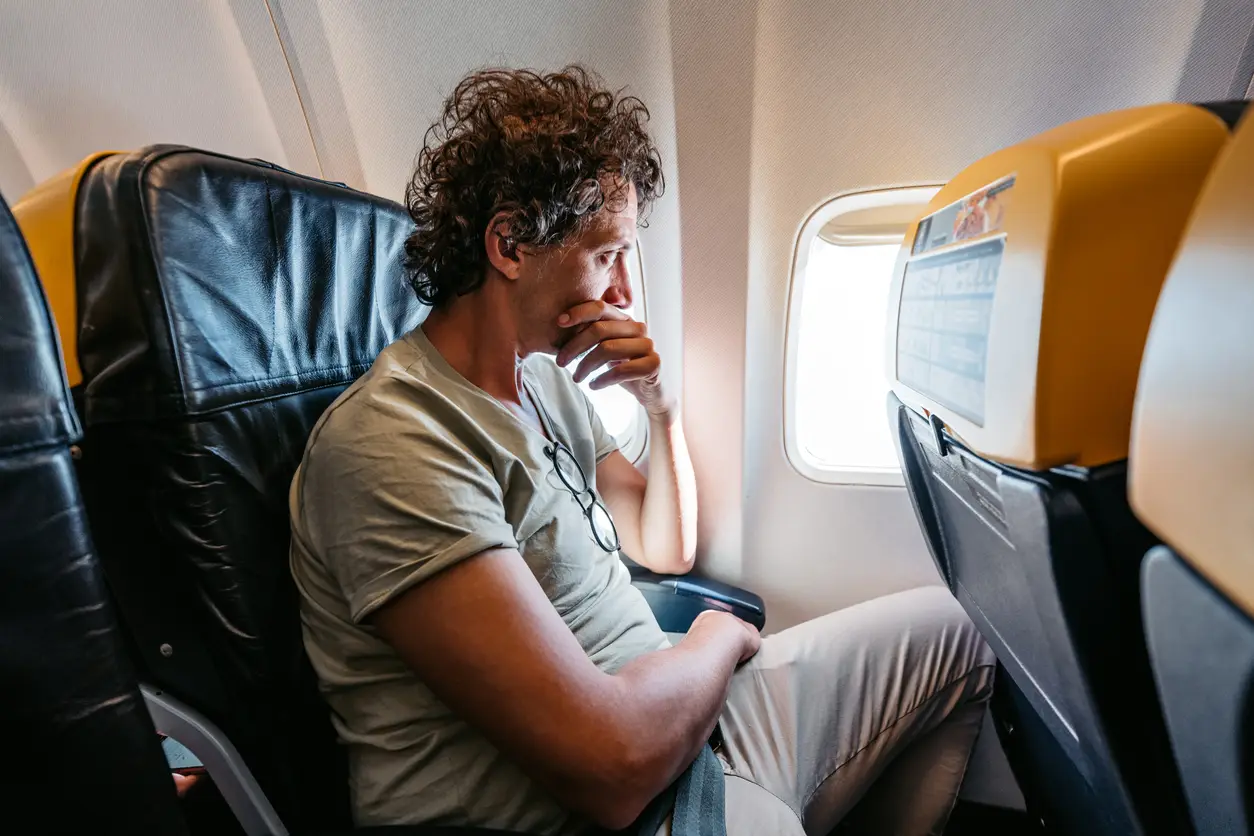
6 factors affecting flight delay compensation
Not all flight delays pay out the same amounts. How much help or money you get depends on a few things:
1. How long the delay lasts
Global aviation laws use time thresholds as the primary trigger for consumer rights.
Under EU261/2004 and UK261, the "Right to Care" (free meals, refreshments, and two phone calls) kicks in at the 2-hour mark for short flights. However, cash compensation is completely off the table unless your total delay at the final destination hits three hours or more. If your flight arrives 2h and 55min late, there is no financial compensation.
In the United States, there is no federal law requiring cash compensation for the inconvenience of a delay if you still take the flight. However, under the DOT Automatic Refund Rule, if a domestic flight is delayed by 3+ hours (or an international flight by 6+ hours) and you choose not to travel, you are legally entitled to a full, automatic cash refund to your original payment method.
In Asia, statutory cash payouts for delays are sparse. Instead, airlines fall back on their internal "Conditions of Carriage" to provide basic meal vouchers after a 2- to 3-hour wait, leaving travelers to rely on travel insurance policies (which typically pay out around S$100 for every six consecutive hours of delay).
2. Distance of your flight
Longer flights often qualify for higher compensation. Airlines usually pay more for a delayed long-haul international flight than a short regional one because the disruption to your schedule is greater.
If you are flying on an EU/UK-regulated carrier or departing from a European hub, the cash compensation tiers are strictly standardised:
Short-haul (under 1,500 km): €250 (S$360)
Medium-haul (1,500 km to 3,500 km): €400 (S$580)
Long-haul (over 3,500 km): €600 (S$870)
In the United States and Asia, distance does not increase cash payouts because flat-rate statutory compensation does not exist there. However, distance does dictate the US DOT refund trigger, doubling the required delay threshold from 3 hours for domestic flights to 6 hours for international ones before a schedule change is legally deemed "significant" enough for an automatic refund.
3. Reason for delay
Airlines will only pay for what they can control, like mechanical faults or crew shortages. They will not pay for things that are out of their control, such as heavy storms, air traffic control limits, or airport strikes.
Under EU261, airlines are legally exempt from paying cash compensation if the disruption is caused by "extraordinary circumstances" (e.g., severe weather like typhoons, air traffic control restrictions, or political unrest). They must pay if the cause is "controllable" (e.g., airline crew scheduling issues, routine technical maintenance faults, or airline staff strikes). Crucial caveat: Even during a severe storm, the airline is still legally required to provide you with food, drinks, and hotel accommodation during the wait.
In the United S: The DOT Customer Service Dashboard holds airlines to binding, contractual commitments. For "controllable" delays lasting 3+ hours, all major US carriers must provide meal vouchers, and hotel accommodations for overnight stays. For "uncontrollable" delays (like a massive winter storm), the airline owes you nothing but a ticket refund if you cancel.
4. When you were notified about the delay
The aviation industry operates on a strict notice timeline. If an airline cancels or heavily reschedules your flight and gives you 14 days or more notice, it is legally treated as a schedule change rather than an operational disruption; you are entitled to a refund or a rebooking, but zero cash compensation.
If notice is given between seven to 13 days, or less than seven days, the airline can only escape paying compensation if the alternative flight they provide adheres to incredibly tight departure and arrival windows (usually within one to two hours of your original time).
5. Type of airline & ticket
Legally, consumer protection laws apply equally whether you fly on a budget carrier or a 5-star airline. However, operational execution varies massively.
Full-service carriers usually have dedicated airport lounges, larger ground handling teams, and reciprocal interline agreements with other airlines. If a flight is canceled, they can effortlessly endorse your ticket over to a competitor to get you moving faster.
Meanwhile, budget carriers often lack these resources and operational networks. Your "care and assistance" might look like a fast-food voucher rather than a hotel room. Because their fleets operate on razor-thin turnaround schedules, you may have to wait days for an available seat on one of their own limited aircraft.
6. How your tickets were booked
If you booked connecting flights together on a single ticket, the airline must find you a new flight if you miss your connection. Under EU, US, and international aviation frameworks, if leg one is delayed and you miss your connection, the airline must rebook you for free, handle your bags, provide accommodation, and pay compensation based on your final arrival time at your destination.
If you buy a cheap flight to a hub on one airline, and a separate ticket onward on another to save money, they are two completely isolated contracts. If airline A is delayed and you miss airline B's flight, Airline B will mark you as a "no-show". You will forfeit your ticket, receive no operational assistance, and have to buy a brand-new flight entirely out of pocket.

How travel insurance provides a safety net for flight delays
Airlines take care of immediate needs like rebooking flights and giving out food vouchers, but they usually do not pay for other losses. They will not refund you for missed tours, prepaid activities, or non-refundable hotel stays at your destination. Having a travel insurance policy helps you get back these extra costs that airlines do not cover.
With Income’s Travel Insurance, you are protected for travel delay of up to 120 hours1 for any reason2 not caused by you. In the event that your trip is delayed overseas due to unforeseen circumstances3, your policy will automatically be extended at no extra charges.
This protects you against common travel problems like damaged belongings, personal accidents, overseas medical bills, and last-minute trip cancellations due to unexpected events.
In fact, Income Insurance is the only insurer that allows you to purchase travel insurance up to a day after you have departed from Singapore.
5 tips to avoid/handle flight delays
You cannot prevent every delay, but you can use these tips to make disruptions easier to handle:
Tip #1: Book with reliable airlines
Check which airlines usually arrive on time for your route. Airlines with more daily flights can rebook you faster if something goes wrong. According to aviation data analytics firm Cirium, global on-time performance (OTP) varies wildly by carrier. Top-tier airlines consistently maintain an OTP of 80 percent to 85 percent - meaning they arrive within 15 minutes of schedule.
Furthermore, booking with a major hub carrier or network alliance like Star Alliance or Oneworld gives you a massive safety net. If a flight is canceled, a dominant airline with 5 to 10 daily flights on that route can effortlessly absorb you into the next departure.
A budget or boutique carrier with only one flight every two days will leave you stranded at the terminal for 48 hours.
Tip #2: Choose early flights
Early flights are less likely to be delayed. Later flights often get held up by a backup of delays from earlier in the day.
Aviation data shows a clear, compounding knock-on effect as the day progresses. Air traffic control data indicates that flights departing before 8:00am boast the highest on-time rates across the industry.
This is because the aircraft is typically already at the gate overnight, and airspace is uncrowded. By 4:00pm, a delay that started at 9:00amin a completely different city has cascaded down the line, causing a backlog of late arrivals and pushed-back departures. Starting early is your best insurance against scheduling gridlock.
Tip #3: Keep essentials in your hand luggage
Pack your medicine, chargers, and a spare change of clothes in your carry-on bag. This keeps you comfortable if your checked bags are delayed or you need to stay in a hotel overnight.
The SITA Baggage IT Insights report highlights that tens of millions of bags are mishandled globally each year, with a significant percentage of those errors occurring during international transfers or mid-trip disruptions.
If you are forced into an unexpected overnight layover due to a cancellation, airlines rarely pull checked luggage from the hold for you. Having a 24-hour survival kit in your cabin bag ensures you aren't forced to buy overpriced toiletries or go without prescription medication while the airline tracks down your suitcase.
Tip #4: Keep all your receipts
Save every receipt for food, drinks, and transport during a delay. You will need them as proof to claim money back from the airline or your insurance company.
Under consumer protection regulations like EU261(for flights departing from or arriving into the EU on an EU carrier) and similar global aviation frameworks, airlines are legally required to provide "duty of care" (meals, refreshments, and hotel accommodation) during extended delays.
However, if the airport customer service desk is overwhelmed and you have to purchase these yourself, insurers and airlines operate on a strict reimbursement model. Digital screenshots or bank statements are often rejected; you must submit itemized, official receipts proving exactly what you spent on basic necessities to get your payout.
Tip #5: Keep your plans flexible or look for flexible insurance options
If it's possible, consider adopting a flexible plan to avoid costly travel changes.
When checking travel insurance promotions, look for plans with "Cancel for Any Reason" coverage so you are protected no matter why your plans change.
Take control of your travel with this guide
Handling a flight delay takes quick action and the right financial protection. By keeping your documentation and knowing what airlines will and will not pay for, you can reduce the stress of a disrupted journey. You cannot stop every delay, but good insurance coverage gives you peace of mind.
Speak with an Income Insurance advisor today to find a plan tailored to your specific travel needs.

Frequently Asked Questions (FAQs) about flight delay compensation
1. Is bad weather a valid reason for flight delay compensation?
Most airlines do not pay out cash for bad weather because it is out of their control. However, they must still take care of you. This means giving you food and drink vouchers or arranging a hotel and transport if you have to stay overnight. For insurance, bad weather is usually covered. For example, Income Insurance pays out if your trip is delayed for more than six hours in a row for reasons beyond your control.
2. Can I claim for a delay if I was informed before arriving at the airport?
Yes. If the airline tells you about a long delay right before your trip, your travel insurance can help. It can cover non-refundable costs or give you a delay payout once the wait passes the minimum required hours, which is usually six hours in a row.
3. What is the difference between an airline refund and a travel insurance claim?
An airline refund only gives back the money you paid for your ticket if you choose not to travel. Travel insurance does much more. It covers extra losses the airline will not touch, like money lost on non-refundable hotels or tours. Insurance also gives you a set cash payout for every block of time you are delayed, rather than just covering the ticket price.
4. What happens if a delay causes me to miss a connecting flight?
If you booked both flights together on one ticket, the airline must put you on the next available flight and take care of you while you wait. If you booked the flights separately on different tickets, the airline does not have to help you. In that case, travel insurance is necessary to help pay for a new flight or a hotel. Income Insurance includes a Travel Misconnection benefit for these situations.
5. How to claim travel insurance in Singapore
Submit your claim online through Income’s portal within 60 days of the incident. You will need to upload these documents:
Travel delay: Your flight ticket, boarding pass, and a letter from the airline stating the cause and length of the delay.
Trip cancellation: Your itinerary, booking invoice, and a refund confirmation letter from the airline or travel agency. If it is a medical cancellation, include a doctor's memo.
Shortening of trip: Your original and new flight schedules, plus receipts for any extra travel or hotel costs.
You can track your claim anytime using the My Income app or customer portal.
1 For Standard Preferred Plan. Policy Ts&Cs apply.
2 Except those caused by the insured. Policy Ts&Cs apply.
3 Your coverage period will be automatically extended at no extra cost for the first 14 days while you are overseas if you are:
- unable to return before the policy expires due to the delay of the public transport that you are travelling on, and the delay is not caused by you, or,
- hospitalised as advised by a medical practitioner.
This article is meant purely for informational purposes and does not constitute an offer, recommendation, solicitation or advice to buy or sell any product(s). It should not be relied upon as financial advice. Please seek independent financial advice before making any decision.
The precise terms, conditions and exclusions of any Income Insurance products mentioned are specified in their respective policy contracts. The policies are protected under the Policy Owners’ Protection Scheme which is administered by the Singapore Deposit Insurance Corporation (SDIC). Coverage for your policy is automatic and no further action is required from you. For more information on the types of benefits that are covered under the scheme as well as the limits of coverage, where applicable, please contact Income Insurance or visit the GIA/LIA or SDIC websites (www.gia.org.sg or www.lia.org.sg or www.sdic.org.sg).


Related Articles


Related Articles


