





7 Costs to Take Note When Driving an Electric Vehicle (EV) in Singapore
Planning to buy an EV in Singapore? Learn more about the 7 costs of electric vehicle ownership compared to a petrol car.

Key takeaways
Electric vehicle (EV) costs include upfront car purchase cost, charging, parking, car insurance, and maintenance.
Charging costs can vary depending on whether you charge at home or use public AC or DC chargers.
Installing and maintaining a home charger may involve additional upfront and ongoing costs.
Understanding these costs can help you budget more confidently and get the most from EV ownership.
If you've recently bought or switched to an electric vehicle (EV), you've probably realised that the purchase price is only one part of the ownership journey. Like any vehicle, EVs come with ongoing running costs that can influence how much you spend over time.
While electricity often replaces petrol as your main fuel expense, there are several other EV costs worth planning for, from charging and parking to home charging equipment and insurance. Understanding these expenses can help you budget more confidently and avoid unexpected surprises.
Upfront costs
Here is a breakdown of the key upfront expenses involved in getting EV in Singapore.
1. Car purchase cost
The biggest headline for 2026 is the EV Early Adoption Incentive (EEAI), which will be expiring on December 31, 2026.
While the scheme was extended for one final year, the maximum EEAI rebate cap in 2026 has been halved to S$7,500. Combined with the revised 2026 VES Band A rebate ($22,500), the maximum total savings will be S$30,000 this year.
Consider an entry-level model like the Dongfeng Box VIGO which is now retailing for S$161,888*. This advertised price factors in both the S$7,500 EEAI and S$22,500 VES Band A rebates.
So how much is the upfront car purchase cost? Under the Monetary Authority of Singapore (MAS)'s regulations, the maximum loan amount you can take depends on the car’s Open Market Value (OMV).
- If OMV is S$20,000 or below (70% Max Loan): You must pay a minimum 30 percent downpyament, which is equivalent to S$161,888 × 30% = S$48,566
- If OMV drops slightly above S$20,000 (60% Max Loan): You must pay a minimum 40 percent downpayment, which is equivalent to S$161,888 × 40% = S$64,755
Do also factor in dealer admin and registration fees, which cover Land Transport Authority (LTA) registration fee, plate making, and IU unit installation if not already waived in promotional packages.
2. Road tax
For a brand-new vehicle, the first road tax is paid upon initial registration at the dealership. For a used car, any remaining road tax transfers to you.
EV road tax is calculated based on the motor's power output (kW), rather than engine displacement. Crucially, the government imposes an Additional Flat Components (AFC) of S$700 per year on all EVs to offset the fuel duties that EV owners avoid.
3. Insurance
Like the road tax, you must pay your EV car insurance upfront.
While premiums vary depending on factors such as your vehicle model and driving profile, it is also worth checking whether your policy includes protection for EV-specific features, such as battery-related incidents, private charging stations, cyber-related risks, and emergency charging support.
Maintenance costs
Check out these five costs in maintaining an EV car in Singapore.
1. Energy cost
The most immediate financial benefit of driving an EV is the cost of electricity.
Petrol expenses depend on vehicle size, engine type, and fuel efficiency, alongside global crude oil fluctuations, refining costs, and taxes. As of July 2026, it costs S$3.37 per litre, which is equivalent to S$151.65 to fill up a 45L tank.
Meanwhile, public charging in Singapore provides provides the following:
Public fast charging: DC fast chargers recharge vehicles much more quickly, making them useful for shorter stops, although they typically cost more to use. They typically cost between S$0.58 and S$0.83 per kWh depending on the operator and location.
Public slow charging: AC chargers deliver electricity at a slower rate and are generally suitable if your vehicle will already be parked for several hours, such as while you're at work or shopping.
Fully recharging a standard 60 kWh battery from near-empty costs about S$33 to S$43.
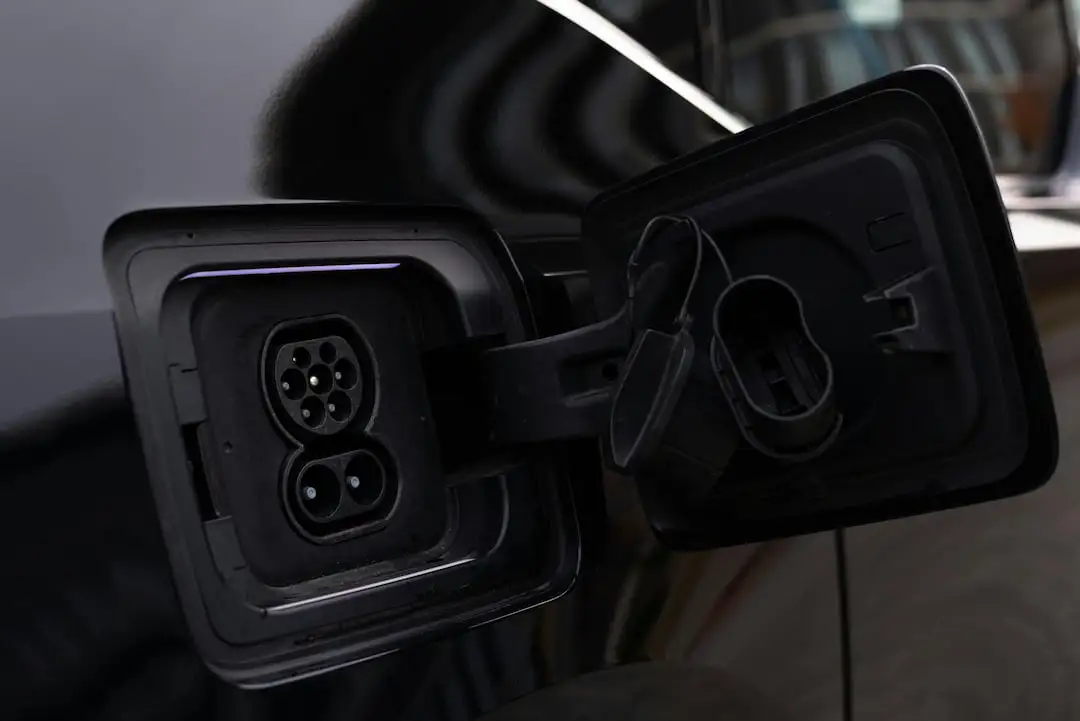
If you live in a landed property or a condo with a dedicated AC charger, you will pay the SP Group regulated tariff. However, upfront costs such as the purchase and installation of the charger itself will be steeper, roughly costing S$3,500 onwards.
Income's eDrivo Car Insurance offers an add-on coverage for your private electric vehicle charging station. We cover up to $5,000¹ for the cost incurred in the event of accidental damages, including fire and other external causes².
2. Parking costs
Unlike petrol cars, EVs usually remain parked while charging. This means drivers may need to consider both parking charges and charging fees when deciding where to top up their battery.
For example, if you're charging at a shopping centre, office building, or other public charging stations, you may pay for parking throughout the charging session in addition to the electricity used. Depending on the charging operator, some locations may also impose idle fees if a vehicle remains connected after charging has finished.
Choosing where to charge can therefore become part of managing your overall EV costs. Some drivers combine charging with work, shopping, or dining to make better use of the time their vehicle is already parked, while others compare nearby charging stations based on parking rates, charger availability, and charging speeds.
3. Battery
The battery is the most expensive and unique component of an EV.
Modern EV batteries lose capacity gradually over time, typically two to three percent per year under normal use. After 10 years (one COE period), most owners experience around 15 percent to 25 percent range reduction. In practical terms, a car with a 400km range when new might deliver 300–340km after a decade — still more than sufficient for Singapore's daily driving needs.
Within the 8-year warranty period, most degradation issues are covered. After warranty, factor battery health into your running cost assumptions, especially if you plan to own the car for the full 10-year COE.
To protect your battery, follow these tips:
- Avoid consistently charging to 100% (aim for 80%–90% daily)
- Use DC fast charging sparingly
- Park in the shade where possible to avoid heat exposure
4. Maintenance cost
One advantage of EV ownership is that they are mechanically much simpler, with fewer moving parts than petrol cars. Without engine oil, spark plugs, or timing belts, some routine servicing costs may be lower.
Furthermore, because EVs use regenerative braking (using the motor to slow the car down), brake pads can last two to three times longer.
Service Item | EV | Petrol Car |
Engine oil & filter | ❌ | ✅ |
Air filter, spark plugs, belts | ❌ | ✅ |
Brake pads / discs (regen braking reduces wear) | ✅ with less frequent replacement | ✅ |
Tyres, cabin filter, wiper blades | ✅ | ✅ |
However, there is one area where EVs cost more to maintain: tyres.
EVs are heavy due to their massive battery packs and their electric motors deliver instant torque to the wheels. If you drive aggressively, you will burn through a set of tyres noticeably faster than you would in a petrol car.
5. Unexpected costs
Last but not least, be sure to cater for unexpected costs.
Even with careful planning, unexpected expenses can arise during EV ownership. These may include accidental damage to charging equipment, towing costs if your vehicle cannot be driven, or emergency charging when the battery runs unexpectedly low.
Income's eDrivo Car Insurance includes Emergency Mobile Rescue4, where our service provider (P.UP) will arrive at the scene and provide DC fast charging of up to 20% battery capacity so you can drive to the nearest charging station, subject to policy terms and conditions.
Ways to manage EV costs
If you're new to EV ownership, below are five simple habits to help you reduce costs.
- Charge while you're already parked: Charging while you're shopping, working, or dining can help reduce the need for dedicated charging trips while making better use of your parking fees.
- Match the charger to your parking duration: If you'll be parked for several hours, an AC charger may be sufficient. Reserve DC fast chargers for occasions when you need to recharge quickly before continuing your journey.
- Avoid idle fees: Move your vehicle once charging is complete to avoid potential idle fees where they apply and make the charger available for other EV drivers.
- Plan charging before longer journeys: Planning where to charge before longer drives or busy weekends can help you avoid unnecessary detours and reduce reliance on more expensive fast charging.
- Review your insurance: As your EV ownership needs evolve, review your car insurance periodically to ensure your coverage continues to reflect how you use your vehicle.
If you're buying your first EV, it's also worth working through a checklist for first-time EV car owners so you can budget for these additional ownership costs from the outset.
Take control of your EV costs
While the car cost and charging are often what people associate with EV ownership, it is only one part of the overall cost.
Parking, charging equipment, maintenance, and insurance all contribute to the total cost of driving an EV. Understanding these ongoing EV costs can help you budget more confidently and enjoy a smoother ownership experience over the long term.
Frequently Asked Questions (FAQs) about EV costs in Singapore
1. Is charging an EV cheaper than petrol?
In many cases, charging an EV can cost less than refuelling a petrol vehicle, particularly if you charge at home using your household electricity supply. However, the amount you save depends on factors such as electricity tariffs, your vehicle's energy efficiency, and where you charge. Public DC fast chargers generally cost more than AC chargers because they deliver electricity much faster.
2. Do EV charging stations charge different prices?
Yes. Charging fees vary between operators and are influenced by factors such as charger type, charging speed, and location. AC chargers are generally more economical and are suitable if your vehicle will already be parked for a few hours, such as while you're at work or shopping. DC fast chargers offer quicker charging but usually come at a higher price. Comparing nearby charging stations can help you balance convenience with ongoing running costs.
3. How much does it cost to install a home EV charger in Singapore?
Thepurchase and installation of the charger itself costs S$3,500 onwards. However, the price varies depending on the charger selected, the electrical work required, and the type of property. Besides purchasing the charger itself, installation costs may include cabling, circuit upgrades, and professional installation by a licensed electrician.
4. What is the difference between AC and DC charging?
*Average price listed on car comparison websites (carro.co/sg & sgcarmart.com) as of 8 Jul 2026.
1 Liability for damage to property, injury or death to any third party is excluded.
2 We will pay you for loss or damage to your private electric charging station caused by:
- Accidental collision;
- Fire, external explosion, lightning, burglary, housebreaking and theft;
- Malicious act by a third party;
- Strike, riot, or civil commotion;
- Flood, typhoon; hurricane, volcanic eruption, earthquake, or other natural disaster.
This benefit is applicable to you only one time per period of insurance.
3 Cyber hacking by malicious act of gaining unauthorised access to your vehicle systems by any unauthorised person or entity.
4 Emergency Mobile Rescue
- We are entitled to modify or alter the manner this service is delivered without notice.
- The geographical coverage and contact details of our Emergency Mobile Rescue Service Provider is available on our website, which will be updated from time to time at our sole discretion.
- This benefit is applicable to you only one time per period of insurance. Subsequent usage will be chargeable.
- This benefit is not applicable for AC charging cars.
This article is meant purely for informational purposes and does not constitute an offer, recommendation, solicitation or advice to buy or sell any product(s). It should not be relied upon as financial advice. Please seek independent financial advice before making any decision.
The precise terms, conditions and exclusions of any Income Insurance products mentioned are specified in their respective policy contracts. The policies are protected under the Policy Owners’ Protection Scheme which is administered by the Singapore Deposit Insurance Corporation (SDIC). Coverage for your policy is automatic and no further action is required from you. For more information on the types of benefits that are covered under the scheme as well as the limits of coverage, where applicable, please contact Income Insurance or visit the GIA/LIA or SDIC websites (www.gia.org.sg or www.lia.org.sg or www.sdic.org.sg).

Related Articles

Related Articles


