




5 Community Support to Rely On in Singapore When Caregiving Needs Change
Learn how & what to prepare when caregiving needs change unexpectedly at home, along with the role domestic helpers often play.

Key takeaways
- Caregiving needs within a household can change suddenly after an illness, injury, or a worsening health condition, requiring families to adjust routines and responsibilities quickly.
- Increasing caregiving demands can create emotional, physical, financial, and time-related strain for both family members and the helper.
- Regularly reviewing household arrangements, contingency plans, and caregiving support may help families manage disruptions more steadily over time.
Care needs within a household can change very quickly.
An elderly parent who previously managed daily activities independently may suddenly require help with mobility, bathing, medication management, or supervision after returning home from the hospital. A child recovering from illness may need closer monitoring throughout the day, more frequent medical appointments, or assistance with feeding and daily routines.
These changes often affect the entire household. Family members may need to rearrange work schedules, attend medical appointments more frequently, or share caregiving responsibilities differently.
At the same time, the helper may take on longer hours or more physically demanding tasks including supervision, mobility assistance, medication reminders, meal preparation, and household support during this period.
As Singapore’s population ages, more households are managing changing caregiving needs at home. The challenge for many families is not only finding caregiving support quickly but also maintaining stable arrangements over time.

5 community support services households to rely on
Many families use a combination of family support, domestic help, and community care services to manage changing caregiving needs at home. In Singapore, several government and community-based schemes are available to help households manage caregiving responsibilities at home.
1. Agency for Integrated Care (AIC)
The Agency for Integrated Care is often one of the first points of contact for families after a hospital discharge or major change in care needs.
AIC helps families arrange care assessments and referrals for services such as:
- home nursing
- rehabilitation services
- dementia care support
- day care services
- caregiver support programmes
Families may also receive guidance on available subsidies, long-term care options, and community care resources.
2. Home Caregiving Grant
The Home Caregiving Grant provides monthly financial support to eligible caregivers caring for individuals with a permanent moderate disability.
Eligible households may receive up to S$600 per month to help offset caregiving-related expenses. Eligibility is generally based on disability assessment requirements and household income criteria.
Families often use the grant to support caregiving arrangements at home, including care services and household support needs.
3. Home personal care services
Home personal care services provide assistance to individuals who require help with activities of daily living at home.
Depending on the care needs involved, services may include:
- showering and personal hygiene support
- dressing assistance
- feeding support
- mobility assistance
- meal preparation
- supervision during the day
These services are commonly used when family members are unavailable during working hours or when caregiving becomes too physically demanding for the household alone.
4. Active Ageing Centres
Active Ageing Centres provide community-based programmes and support for seniors living within the neighbourhood.
Services and activities may include:
- Social and recreational programmes
- Exercise sessions
- Befriending services
- Wellness activities
- Regular check-ins for seniors living alone
Some centres also help connect seniors and caregivers to additional healthcare or social support services when needed.
5. Counselling & caregiver support groups
Caregiver support groups and counselling services are increasingly used by individuals managing long-term caregiving responsibilities.
These services may help caregivers manage:
- Emotional stress
- Burnout
- Caregiver fatigue
- Isolation
- Difficulties balancing work and caregiving responsibilities
Some support groups also provide practical advice from other caregivers facing similar situations.
5 area to review as care needs change
Caregiving needs often change over time rather than staying the same.
An elderly parent’s mobility may decline further, medical appointments may become more frequent, or a child may require additional therapy and supervision.
Families may need to review caregiving arrangements regularly to ensure it is sustainable in the long run.
1. Distribution of caregiving responsibilities
In some households, caregiving responsibilities gradually become concentrated on one person without clear planning. Reviewing how responsibilities are shared among family members may help prevent burnout and reduce pressure on a single caregiver.
2. The helper’s workload
As care needs increase, families may need to assess whether the helper’s workload remains manageable and whether additional support is needed.
Some caregiving routines may involve helping with transfers, assisting elderly family members with reduced mobility, managing behavioural changes associated with dementia, or handling interrupted sleep schedules when overnight supervision is needed. For employers, this can create concerns about long-term sustainability.
If a large portion of daily caregiving depends on a single individual, the household may face immediate disruption if the helper becomes ill, is injured, or is temporarily unable to work.
Income’s Domestic Helper Insurance includes local and emergency overseas hospitalisation1 coverage for your helper (including COVID-192). We will also provide a Letter of Guarantee3 with direct payment to the hospital for your helper’s hospitalisation expenses. This may help reduce large out-of-pocket hospital payments during an already demanding period for the household.
Income Insurance also compensates your helper’s wages, up to 30 days if your helper is hospitalised or on hospitalisation leave and is unable to carry out her duties. This support may help reduce financial strain when caregiving arrangements are unexpectedly disrupted.
3. External caregiving support
Some households may eventually require additional services such as home nursing, rehabilitation support, or temporary caregiving assistance as care needs increase.
4. Household finances & coverage needs
Long-term caregiving may increase household expenses over time. Families may also review whether existing coverage still aligns with their caregiving arrangements and household needs.
5. Contingency planning
Households may also need to consider what happens if caregiving arrangements are disrupted unexpectedly. This may include situations in which a family member becomes unavailable to help, or the helper is temporarily unable to continue working due to illness or hospitalisation.
These reviews can become increasingly important in households where caregiving responsibilities continue over an extended period.
In households where caregiving responsibilities rely heavily on the helper’s daily support, the helper’s own hospitalisation or medical leave may create additional financial and caregiving pressures.
4 challenges to expect when care needs increase
When a family member suddenly requires more care, households often need to adjust very quickly. Medical appointments, supervision needs, household responsibilities, and work schedules may all change within a short period of time. Even families with existing support arrangements may find it difficult to manage when caregiving demands become more intensive or long-term.
1. Time pressure & schedule disruptions
One of the most immediate challenges is managing time. Medical reviews, therapy sessions, medication schedules, and caregiving routines can quickly take up a large part of the day.
Family members may need to balance work responsibilities alongside caregiving duties, childcare, and household management.
Some may need to take urgent leave, reduce working hours, or rearrange their schedules to ensure someone is available at home.
Even with a domestic helper, the situation can become difficult if the family member requires close supervision or frequent assistance throughout the day.
2. Emotional strain & decision fatigue
Caregiving can place emotional pressure on the entire household. Families may need to make decisions about treatment plans, caregiving arrangements, finances, and long-term support while trying to manage the emotional impact of a loved one’s health condition.
Stress can build over time, particularly if caregiving responsibilities continue for several months or longer. Family members may also feel frustrated or overwhelmed when responsibilities are unevenly shared or when there is uncertainty about how long the situation will continue.
3. Physical demands within the home
Some caregiving responsibilities can be physically tiring, especially when supporting elderly family members with reduced mobility or medical conditions requiring close supervision.
Daily caregiving may involve helping with transfers, assisting with movement around the home, supporting bathing routines, or supervising someone with dementia or cognitive decline. Interrupted sleep schedules and repeated lifting or the need for mobility assistance can also become physically exhausting over time.
These demands may affect both family members and the domestic helper, especially if caregiving support is limited to only one or two individuals within the household.
4. Financial adjustments & caregiving costs
Caregiving changes can also increase household expenses quite quickly. Families may face additional costs such as:
- Medical consultations and follow-up treatments
- Rehabilitation or therapy sessions
- Transport to hospitals or clinics
- Home modifications for safety or mobility
- Disruptions to employment or reduced working hours
In some households, increasing care demands may eventually require support beyond what the family and helper can manage alone. As care needs become more demanding or long-term, external support services may become part of the household’s overall caregiving arrangement.
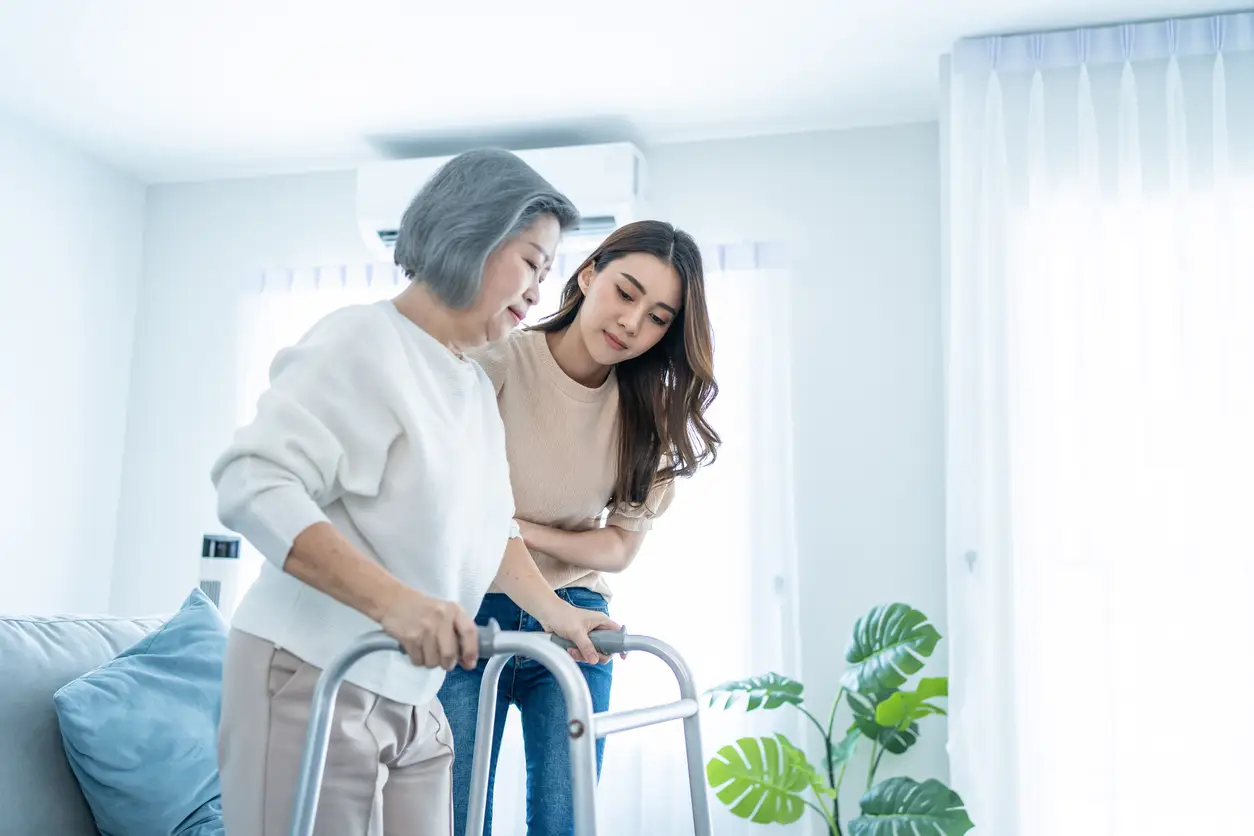
Plan confidently for household care with the support you need
Caregiving needs within a household can change quickly after a medical event, worsening health condition, or shift in family circumstances. In many homes, the domestic helper becomes part of the day-to-day caregiving support that helps the household continue functioning during these periods.
As care needs increase, families may need to review routines, caregiving arrangements, household responsibilities, financial planning, and contingency support more regularly. Planning ahead may help households manage caregiving changes more steadily over time.
If your household’s care needs are changing, speak with an Income Insurance advisor to better understand the types of coverage available for your helper and household arrangements.
Frequently Asked Questions (FAQs) about caregiving support in Singapore
1. Can a domestic helper assist with elderly caregiving at home?
In many Singapore households, domestic helpers assist elderly family members with daily living support at home. This may include meal preparation, supervision, mobility assistance, medication reminders, accompanying seniors to appointments, and helping with household routines.
However, domestic helpers are not necessarily trained medical caregivers. Some elderly individuals may eventually require additional professional support, such as home nursing, rehabilitation services, dementia care support, or assistance with more complex medical needs.
The level of caregiving support required often depends on the individual’s mobility, medical condition, cognitive health, and level of independence. In some households, the helper supports day-to-day routines while family members and external care services manage more specialised care needs.
2. What should I do first if my family member suddenly needs urgent caregiving support at home?
If a loved one’s health condition changes abruptly due to an illness or injury, your first step should be to establish a stable care routine and seek professional guidance.
Contact the AIC: Reach out to the Agency for Integrated Care (AIC) in Singapore to arrange a care assessment and explore referrals for home nursing, day care, or rehabilitation services.
Review Financial Subsidies: Check your eligibility for schemes like the Home Caregiving Grant (HCG), which offers up to S$600 per month to help offset immediate caregiving costs.
Audit Home Safety: Make quick environmental modifications, such as installing grab bars or reorganizing sleeping arrangements, to prevent fall risks.
3. How does domestic helper insurance help if my caregiving arrangements are disrupted?
When your household relies heavily on a maid for daily caregiving support, their unexpected illness or injury can create a double crisis: a loss of caregiving help and sudden medical bills. Income’s Domestic Helper Insurance protects your household by providing:
Hospitalisation coverage: Direct payment or letters of guarantee to hospitals for your helper’s medical expenses, reducing your out-of-pocket strain.
Wages compensation: Reimbursement for your helper's salary (for up to 30 days with certain policies) while they are hospitalized or on medical leave, helping you offset the cost of hiring temporary caregiving assistance.
1 The final claim amount you will receive depends on the relevant pro ration factor applicable to the eligible hospital and surgical expenses being claimed. Please refer to the policy conditions for the pro ration factor table.
2 For cover on inpatient hospital and surgical expenses only. Please refer to the policy conditions for more details.
3 This Letter of Guarantee (LOG) service is only applicable if your domestic helper is hospitalised at a Singapore government restructured hospital. The LOG limit will be up to a maximum of $60,000 per year and the LOG amount issued will depend on the actual hospital bill and is subject to our policy terms and conditions and individual hospital guidelines.
This article is meant purely for informational purposes and does not constitute an offer, recommendation, solicitation or advice to buy or sell any product(s). It should not be relied upon as financial advice. Please seek independent financial advice before making any decision.
The precise terms, conditions and exclusions of any Income Insurance products mentioned are specified in their respective policy contracts. The policies are protected under the Policy Owners’ Protection Scheme which is administered by the Singapore Deposit Insurance Corporation (SDIC). Coverage for your policy is automatic and no further action is required from you. For more information on the types of benefits that are covered under the scheme as well as the limits of coverage, where applicable, please contact Income Insurance or visit the GIA/LIA or SDIC websites (www.gia.org.sg or www.lia.org.sg or www.sdic.org.sg).


Related Articles


Related Articles


