





Upgrading from HDB to Condo: A First-Timer’s Guide to Owning Private Property in Singapore
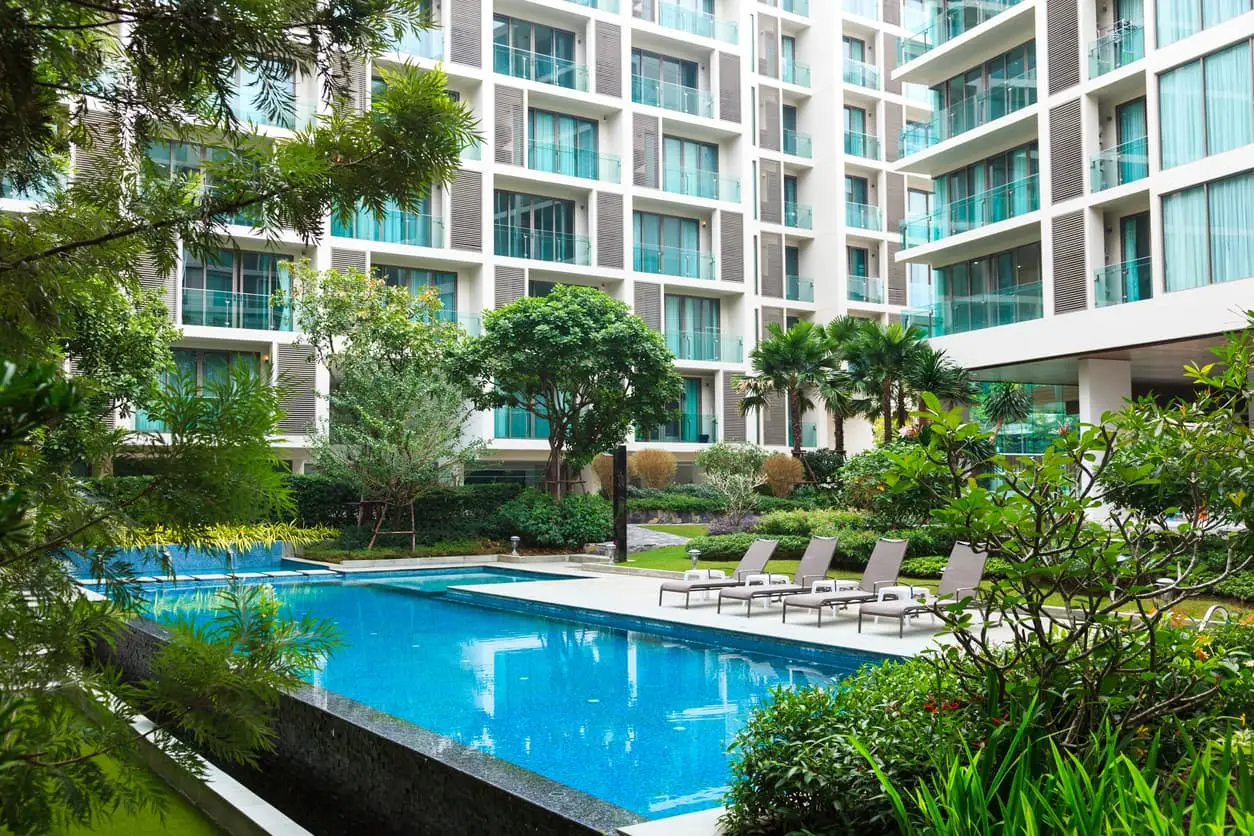
Deciding to upgrade from a HDB to a condo is a big decision with many things to consider such as finances and types of private property. To help you on your condo buying journey, here’s our guide on how to finance and also what happens after your well-deserved upgrade!
Before upgrading from HDB to condo: 3 key considerations
1) What kind of amenities are you looking for?
If you’re thinking of upgrading from HDB to condo, it’s usually for the amenities. Most condos in Singapore have private facilities like a gym, pool and some may have spa or saunas as well. These facilities do away with the hassle of paying monthly fees or commuting. Plus, because these are private facilities, there are less people using it compared to shared ones located in the HDB areas. If you know that you’ll be using the gym, pool and other amenities very regularly, this more than makes up for the maintenance fees!
Another thing to consider is, do you own a car? Your dream condo may not be as close to public transportation facilities compared to a HDB flat. If you use public transportation regularly, you’ll need to scout for condos that are more accessible or those closer to your workplace, which could cost more depending on the area.
For those with kids or really value their privacy, a condo’s security would surely be a huge factor in considering upgrading from an HDB. Condos have their own security measures which may translate to feeling safer and being able to screen your guests.
2) Can you afford the upgrade?
A seemingly easy question to answer but do you have a clear idea of how much it costs to upgrade from HDB to condo?
Key costs to consider include:
- Option To Purchase (OTP) or Booking Fee
An Option to Purchase is a contract for sale and purchase of a property between the seller and buyer. There’s usually a 14-day (negotiable) Option Period where the buyer needs to consider whether to buy the property. An Option Fee is charged to the buyer which is usually 1% of the sale price of the property. During the Option Period, the seller cannot sell the property to other buyers. Once you decide to purchase the property and sign the acceptance copy of the OTP, you’ll need to pay the balance deposit. This is often 5% of the sale price, minus the Option Fee.
If you’ve opted to buy a new launch condo, it’s more straightforward and you’ll need to pay a booking fee. The booking fee is usually 5% of the sale price of the condo and this needs to be paid in cash.
Remember that there’s also stamp duty and ABSD (Additional Buyer’s Stamp Duty if this is your second property) to pay as well.
- Down payment
Do keep in mind that banks will only loan up to 75% of the purchase price for private property in Singapore. You’ll need to have 25% of the purchase price upfront as down payment.
- CPF
If you own more than one property that is purchased with your CPF OA savings, your Basic Retirement Sum needs to be set aside in your CPF accounts before you’re allowed to withdraw from your OA.
Refer to this FAQ on the amount of OA savings that can be used.
- Total Debt Servicing Ratio
You’re not allowed to use more than 55% of your monthly income to service your debts which includes home loans, car loans, student loans and credit card debt. Thus, your maximum loan amount depends on your salary and the amount of debt you have.
3) Have you decided on the type of condo?
There are a few things to consider when it comes to buying a new vs resale condo. Here are the key differences:
Financing your new condo: Sell HDB first vs Sell HDB later
Deciding when to sell your HDB, whether before or after your upgrade, is another huge decision with many things to consider. You’ll need to know your own financial capabilities, such as how much cash you have on hand, your combined salaries (for bank loan – TDSR), the price of your dream condo, where to stay while you wait for your new condo to be built and more.
Depending on whether you sell your HDB before or after purchasing your condo, these items will differ in value:
- Basic Retirement Sum
- Bank Loan (Loan to Value)
- Minimum down payment
- Maximum loan per month
- Additional Buyer’s Stamp Duty
- Property Tax
- Additional costs (rent etc.)
Here’s a breakdown of the costs and considerations for selling your HDB before buying your condo versus selling off your HDB first before purchasing your condo.
Scenario 1: Sell HDB first
In the event you sell your HDB first, it’ll be a little more straightforward. After selling your HDB, you’ll need to pay back the amount borrowed plus interest to purchase the HDB back into your CPF OA.
Assuming the condo you want to buy costs $1,000,000 and needs 24 months to complete, and you and your partner are 35 years old with a combined salary of $8,000 (no credit card debt or car loan). Here’s a breakdown to illustrate the costs if you sell your HDB first.
If you want to save on rental costs, it may be better to look for a resale condo so you won’t have to wait to move in.
Scenario 2: Sell HDB after buying condo
Since your condo will count as a second property, you will only be able to withdraw from your CPF OA if your Basic Retirement Sum is reached. In 2022, that’ll be $96,000.
Assuming the same conditions as earlier, here’s a breakdown to illustrate the costs if you sell your HDB first.
The upfront costs for buying a condo before selling your HDB is much higher compared to selling your HDB first. However, selling your HDB first may incur extra cost in the form of rental while waiting for your condo to be built.

Will HPS still protect you after you’ve bought a condo?
HPS refers to Home Protection Scheme which is a form of mortgage-reducing insurance that protects you and your loved ones from losing your HDB flat in the event of death, terminal illness, or total permanent disability. HPS will settle the outstanding housing loan up to the insured sum to protect you and your loved ones from financial burden.
However, once you sell your HDB to upgrade to private property like a condo, you will no longer be covered under HPS. This is when you should consider purchasing a private insurance coverage for your condo.
Income’s TermLife Solitaire protects you and your loved ones’ finances by insuring against death and terminal illness with a sum assured1 of at least $500,000. If both you and your partner each have this policy, with the addition of the Disability Accelerator2 rider, in the event that your partner is diagnosed with a permanent disability, the payout will cover any outstanding loans and also maintain your family’s lifestyle.
Enhanced coverage includes the Hospital CashAid3 rider which helps to reduce out of pocket expenses in the event of hospitalisation. Essential Protect4 rider provides additional coverage in the event of death, total and permanent disability (TPD before age 70), terminal illness or diagnosis of dread disease (except for angioplasty and other invasive treatment for coronary artery) during the term of the rider.
Conclusion
Upgrading from HDB to condo sounds like the dream but as with any property purchase, it is a long-term financial commitment. It is important to be prudent when considering such a purchase. Most importantly, if you’re upgrading to private property, make sure to protect yourself and your loved ones from liabilities by closing the protection gap via insurance.
1 If the insured becomes terminally ill or dies during the term of the policy, Income Insurance will pay the sum assured. The policy will end after payment is made.
2 Disability Accelerator rider pays the sum assured under this rider if the insured becomes totally and permanently disabled (before the anniversary immediately after the insured reaches the age of 70) during the term of the rider. This rider will end after Income Insurance make this payment. Any payment under this rider will form an accelerated payment and reduce the sum assured of its basic policy and other accelerated riders by the same amount that Income Insurance pay under this rider.
3 For Hospital CashAid, the premium will be based on the prevailing premium rates as of the insured’s age and sum assured at the anniversary. Please refer to the policy contract for further details.
4 You can find the list of specified dread diseases and their definitions in their respective policy contracts. Income Insurance will not pay this benefit if the insured is diagnosed with the disease within 90 days from the cover start date for major cancer, heart attack of specified severity, coronary artery by-pass surgery, angioplasty and other invasive treatment for coronary artery or other serious coronary artery disease. If the insured undergoes angioplasty and other invasive treatment for coronary artery during the term of the rider, Income Insurance will pay 10% of the sum assured, up to S$25,000. Income Insurance will only pay for this condition once under this benefit. After this payment, Income Insurance will reduce the sum assured of this rider accordingly. Income Insurance will work out any future premiums or claims based on the reduced sum assured. For Dread Disease Premium Waiver and Enhanced Payor Premium Waiver, the premium waiver benefits do not apply for angioplasty and other invasive treatment for coronary artery.
This article is meant purely for informational purposes and does not constitute an offer, recommendation, solicitation or advice to buy or sell any product(s). It should not be relied upon as financial advice. Please seek independent financial advice before making any decision.
The precise terms, conditions and exclusions of any Income Insurance products mentioned are specified in their respective policy contracts. The policies are protected under the Policy Owners’ Protection Scheme which is administered by the Singapore Deposit Insurance Corporation (SDIC). Coverage for your policy is automatic and no further action is required from you. For more information on the types of benefits that are covered under the scheme as well as the limits of coverage, where applicable, please contact Income Insurance or visit the GIA/LIA or SDIC websites (www.gia.org.sg or www.lia.org.sg or www.sdic.org.sg).

Related Articles



Related Articles


